Category: Trucking Accidents

trucking accidents, semi-truck crashes, and 18-wheeler crashes

  • Jacksonville Resident Maria Ocasio Killed in Hit-and-Run Collision with Tractor Trailer

    Jacksonville Resident Maria Ocasio Killed in Hit-and-Run Collision with Tractor Trailer

    [vc_row][vc_column][vc_column_text]On Friday morning, March 15, Jacksonville resident Maria Ocasio, 50, was killed after a tractor-trailer struck her car on Highway 17 in Fleming Island, Florida.

    Florida Highway Patrol officers say Ocasio was driving south around 7:15 AM when the tractor-trailer tried to move into her lane. The trailer hit Ocasio’s car, sending it off the roadway and onto the median, where it struck a support pole. The truck’s driver, Johnny Gratta, 68, continued south until he was stopped by authorities.

    A Clay County deputy witnessed the crash and attempted to aid Ocasio before chasing after the truck. Sadly, Ocasio was pronounced dead at the scene of the accident. The deputy later caught up with the truck and pulled it over, then arrested Gratta for leaving the scene of a crash resulting in a fatality. Troopers say Gratta is cooperating with the investigation.

    If there was negligence on the part of the semitrailer driver or the truck’s manufacturer, Ocasio’s family may have grounds to move forward with a civil Wrongful Death case.

    The Law Offices of Craig Goldenfarb, P.A. is dedicated to protecting the rights of individuals and families that have suffered injuries due to the negligence of others. Our attorneys have more than 170 years of combined experience investigating and representing those who have suffered tragic loss or severe injuries.

    If you know a surviving family member of a person who was killed in a trucking crash, please encourage them to give our firm a call immediately. The consultation is completely free, and there is no out-of-pocket cost to the family to hire us.[/vc_column_text][/vc_column][/vc_row]

  • Martin County Truck Crash is a Potential Case for the Hawthorne Family

    A family man lost his life after a tractor trailer he was riding as a passenger in rolled over and crashed in Martin County last week. The victim was identified as Nathaniel Hawthorne, Jr.

    Mr. Hawthorne, as revealed in media reports, is a father of at least one son. Crash investigations are unspecific in their reporting of what happened, but it seems the truck was intending to make a left-hand turn when it veered right, and crashed.

    The family of Nathanial Hawthorne Jr. may have a personal injury case

    Because Mr. Hawthorne was a passenger inside the vehicle, the surviving family members of the Hawthorne family may be entitled to compensation under Florida’s wrongful death laws.

    This is an example of how being a passenger in a vehicle involved in a crash can severely affect the lives of the survivors. If Mr. Hawthorne was the primary financial contributor to his household, the surviving family could potentially suffer hardship without him.

    The vehicle was identified as a 2000 Kenworth tractor trailer. It is not clear whether the driver of the truck was working as a truck driver at the time of the crash, nor is it clear whether either man owns the truck, or if the truck is owned by a transportation company.

    If the truck was owned by a transportation company, there may be significant insurance policy coverage for the surviving family to pursue.

    If you or someone you know has been killed as the result of a crash with a commercial vehicle or truck, please call our law firm today. We may be able to help you obtain compensation for your loss.

  • The Most Dangerous I-95 Overpass in South Florida Claims Another Life

    The family of Richard Randolph are mourning their untimely loss of his life this week, following a tragedy on an I-95 overpass in Boca Raton in which the 69-year-old tow truck worker fell to his death while on the job.

    The job he was cleaning up was caused by a commercial semi-truck owned by JJR Transport & Logistics, operated by driver Adrian Figueredo of Miami, Florida. Figueredo intended to enter the highway at the Congress Ave overpass in Boca Raton, when he overshot the entrance, swerved, and crashed the semi-truck into the barrier, causing it to hover slightly over the southbound I-95 lane.

    Mr. Randolph was called to the scene by his employer, Emerald Towing. He was a revered veteran in the tow truck community. Mr. Randolph and his wife, Judy, were looking forward to a looming retirement date. They undoubtedly had grand plans for the future that were cut short on the morning of April 12th, 2017, when Figueredo crashed his semi.

    Sadly, Mr. Randolph fell to his death while doing his job trying to right the leaning truck.

    This Congress and I-95 overpass in Boca Raton is extremely dangerous

    Statistics show that the Congress Ave and I-95 overpass in Boca Raton could be the most dangerous exit and entrance ramp in South Florida, with more than 150 crashes there since 2011. Three fatalities have occurred as a result of those crashes, and more than half resulting in injuries, according to a Palm Beach Post report.

    According to news reports, at least five of those crashes have occurred there in the last year, the most recent crash before the incident involve Mr. Rudolph happening just two weeks prior.

    Why is this overpass so dangerous? According to semi-truck drivers who have crashed in the area, the entrance ramp to I-95 southbound is easy to miss. The southbound exit is similarly difficult to navigate, with many drivers making the mistake of turning left towards a retainer wall, instead of merging right off the ramp. If you miss the entrance, the end of the ramp and a steep drop-off is just about a hundred yards away.

    However, Florida Highway Patrol insists that the common culprit is truck drivers either driving too fast or not paying attention, or both.

    A Dangerous Overpass: I-95 and Congress in Boca Raton

    In the case of Figueredo, FHP has charged him with a crime in connection with the wreck that led to Mr. Rudolph’s death: exceeding the maximum number of hours a commercial truck driver can operate his or her vehicle.

    Who is responsible for the death of Mr. Rudolph, and why a wrongful death lawsuit should be filed

    This is a situation in which Mr. Rudolph’s death was completely and utterly avoidable. That’s because had Figueredo not broken the law by driving for too many consecutive hours, he could have been more attentive while he was behind the wheel at the time of the wreck.

    Signs and markers are posted along the ramps, directing traffic onto the southbound entrance ramp – it seems Figueredo was driving too fast, and possibly exhausted, or at the very least, inattentive.

    The crash caused by Figueredo brought Mr. Rudolph to the scene. While we don’t know exactly why Mr. Rudolph fell (that will be determined by OSHA), we do know that he was an experienced and seasoned professional. His death was the result of mitigating, negligent factors.

    The family should consider hiring a personal injury law firm with experience handling serious wrongful death claims, such as our firm. We handled the wrongful death suit in the 2014 death of a tow truck driver in Jacksonville, Florida, in which we obtained a $6,500,000 settlement on behalf of his surviving family.

    If you or someone you know has died as the result of another’s negligent semi-truck crash, please contact our law firm today for an immediate, private, and free consultation with Mr. Craig Goldenfarb, Esq.

  • What Caused a Cement Truck to Tip Over and Kill Herold Ambroise?

    When a family man loses his life, the surviving family members lose so much, too. Such is true for the surviving family of Mr. Herold Ambroise, a husband and a father who suffered from a tragic incident while working.

    Mr. Ambroise was a concrete contractor, laying down a new curb near the Palm Beach International Airport, when the concrete truck he and a crew were operating inexplicably turned on its side with him underneath. The Palm Beach County Sheriff’s office and the Occupational Safety and Health Administration are both investigating the incident.

    It’s unknown from media reports at this time what happened, but the surviving family members deserve to know the truth.

    What caused the concrete truck to turn onto its side?

    Very few details have been released regarding the investigation into this tragic fatal accident. What we do know is that the accident happened around 10:00 a.m. last Saturday, August 6th. The roadways were wet at the time from recent precipitation.

    We also know that a 28,000-pound concrete mixer truck, similar to the one involved in this incident, can weigh almost twice as much as that – over 50,000 pounds – when fully loaded. These trucks have a relatively high center of gravity, and are known to be prone to tipping.

    It seems from scene photos that the truck which killed Mr. Ambroise was at the time of the accident parked, but no one has confirmed that publicly. Also, it’s unknown whether there was any visible damaged caused to the truck, perhaps by say, an unknown passing vehicle that may have clipped the truck, causing it to tip over.

    Another scenario could be that the concrete was mixed improperly, allowing the substance to harden inside the truck’s barrel quicker than it should have. As the barrel spins, the mixture hardens, and sticks to the inside wall of the barrel. The more that sticks, the heavier it becomes. As it spins clockwise, the left-hand side of the truck can tip as it comes around.

    Given the forces of gravity and inertia, it’s possible to imagine a scenario in which a potentially improper mixture of concrete and water caused the truck to tip over on its own, as it spun the mix. Mr. Ambroise way have simply been in the wrong place at the wrong time.

    The surviving family members can find answers with a personal injury lawyer

    The family will have to wait for the answers to many of their most pressing questions. From similar incidents in which we represented the families of those killed by an act of negligence, we know that the respective investigations by OSHA and PBSO could take up to six months to complete. Those official and separate investigations when complete will contain an official, documented account of the facts of what happened.

    Until then, the family should consider hiring a competent, trustworthy and experienced wrongful death lawyer. Our firm represents the surviving family of victims killed in acts of workplace negligence. Mr. Craig Goldenfarb personally oversees our wrongful death practice, as he is the managing attorney for sensitive, critical cases such as this one.

    Surviving family members may be able to recover future lost wages, compensation for funeral and burial arrangements, and compensation for pain and suffering as a result of a tragic act of negligence such as the one that took Mr. Ambroise’s life.

    If someone you know has been killed in an accident, please consider calling the Law Offices of Craig Goldenfarb, P.A. MR. Goldenfarb and his staff of committed attorneys and paralegals will meet with the family for a personal, confidential and completely free consultation.

  • “The Trucks are Killing Us” Op-Ed Sheds New Light on Dangers of Trucking

    An opinion piece in The New York Times this past weekend is shedding some light on the commercial trucking industry and its dangerous tactics and business practices, and how Congress is enabling the industry to continue with business as usual.

    Written by Howard Abramson, 16-year former veteran of the country’s most influential commercial trucking lobby, the piece digs deep into why trucking in America is so hazardous to passenger vehicles and drivers on our highways. He also set out to expose a cushy relationship between Congress and his former employer, American Trucking Associates.

    Abramson writes that more people will be killed by commercial trucking accidents during this year alone than the total number of people who died from domestic commercial aviation accidents in the past 45 years combined. Despite this, he writes, Congress is doing nothing to strengthen regulations on the trucking industry.

    To the contrary: a number of amendments to a highway funding bill currently making its way through Congress seeks to accomplish the exact opposite. These bills suspend or weaken federal regulator’s attempts to implement various safety standards over the last few years. These standards include limiting how many consecutive hours a truck driver may be behind the wheel and limiting how many hours a driver can work per week.

    Despite public opposition, Congress is moving forward with the bill, which if passed, may allow for bigger and longer trucks to be on the road, and may suspend the age restrictions for interstate truck drivers from 21 years old to just 18 years old. Also, the requirements that a driver take a certain number of hours off before starting their work week again could be suspended.

    These rules seem on the surface to be no-brainers. Crash statistics show over and over again that the number one cause of commercial trucking accidents is fatigued or impaired truck drivers. Yet the trucking lobby is still able to get Congress to pass measures tucked inside spending bills that limit regulations. How, and maybe more importantly, why?

    Safety is not good business

    Why wouldn’t a commercial transport company be interested in implementing simple safety standards that can save the lives of so many Americans? The industry, Abramson says, claims it will be “burdened” with extras costs if Federal safety standards are strengthened. The business is a low-margin business, operators claim. Any raise in costs will be passed to consumers, and Congress shouldn’t allow that. But at $700 billion a year in economic output, just how much would the industry as a whole be losing? Perhaps a couple hundred million, the equivalent of a slight summertime fuel price spike?

    Think of the gains, Abramson says. Requiring drivers to stick to standard safety measures like maximum hours on the road in a given range, and the implementation of safety technology that includes collision detection systems and data recorders, wouldn’t cost them too much to implement. And the return is potentially hundreds of lives saved. Over time, the cost to insure the trucks, drivers, and cargo would steadily deflate, saving the industry hundreds of millions of dollars each and every consecutive year. And the roadways would be safer for all of us.

    Fatalities by trucking accidents are on the rise. No one disputes that. From 2009 to 2013, the latest year of available data, has risen by 17%. Each year in the last four has seen more deaths than the previous one. Deaths are disproportionately levied on passenger vehicle drivers and passengers, not the truck driver. So the commercial trucking industry is operating at the public’s expense.

    The current operations of the commercial trucking industry should be a public health concern.

    The biggest and heaviest long-haul trucks on the road, Class 8 trucks, account for only about 10% of all miles traveled in the U.S., but caused one in eight traffic fatalities in 2013. These trucks are also responsible for nearly a quarter of all traffic fatalities that occur in a work or construction zone.

    These crashes indicate driver fatigue, as the driver likely doesn’t notice the roadway obstruction, and continues through it at normal speed and operation. When all the other passenger vehicle drivers slow down, that creates an extremely dangerous scenario. These trucks are not equipped with accident avoidance technology, so a large number of these fatal accidents in work zones occur when a truck slams into the back of a passenger vehicle, often killing the driver and passengers immediately.

    What will it take to put (and keep) stronger commercial trucking safety standards in place?

    In short, it’s going to take the courage of Congress. Lawmakers must refute the trucking industry’s powerful lobby, and instead put the safety of our nation’s driver first, even if they don’t realize just how much danger they are in. Sharing the road with a massive commercial fright truck is a dangerous proposition, yet, the shipping industry is an important one to ensure the movement of goods around the country to help make modern live easier and more convenient.

    But there is no convenience or good whose delivery is more important than the life of a driver on the roadway. Therefore, Congress should strike these amendments to the highway safety bill currently moving through both houses to ensure safety standards not only stay in place, but are strengthened instead of weakened.

  • Highway Trucking Accidents More Frequent and Fatal in Florida

    Data released by Florida Dept. of Highway Safety shows injuries and fatalities from trucking accidents skew 3X higher than national average

    For Immediate Release – 10/14/13 (WEST PALM BEACH, FL) – For many in South Florida, Interstate 95 is a busy, sprawling pipeline for work-week commuters and other motorists. It’s also the lifeline for enormous, 10,000-pound plus commercial freight liners and trailers, and the rest of us need to share the road. But just how safe is this space-sharing arrangement for Florida drivers?

    According to the Insurance Institute for Highway Safety, while only about 2% of all commercial vehicle accidents in the U.S. result in a fatality, nearly 20% result in a fatality, incapacity, or serious injury. Of all highway and surface street trucking accidents, about 75% result in little or no injury, thanks at least in part to “underride guards”, and the fact that many accidents are low-speed collisions in which the truck strikes another vehicle.

    Sadly, however, the risk of a fatality occurring as a result of a commercial vehicle collision nationwide more than doubles when a passenger vehicle strikes the tractor or trailer from the rear (Source: http://1.usa.gov/19AGddN).

    In Florida, however, those numbers are far more alarming. According to the Traffic Crash Statistics Report for 2010, commissioned by the Florida Department of Highway Safety and Motor Vehicles, while fatalities in overall state-wide vehicle accidents are down from the year before by 4.6%, fatalities resulting from a trucking accident skew higher than the national average at 2.75%, while 59% of accidents involving a truck and trailer resulted in bodily injury or fatality (Source: http://bit.ly/1geYPaH – page 31).

    Data on trucking accidents

    *Data compiled from a 2006 FMCSA report; source link in this document
    **Data compiled from a 2010 FLHSMV report; source link in this document

    Large, commercial vehicle accidents can be terrifying. An August 2013 Palm Beach County-area crash involving a tractor trailer and a Palm Tran bus in which 11 passengers were injured suggests sharing the road with these behemoth machines isn’t as safe as we might think (Source: ).

    And the truck drivers themselves can be dangerous and unpredictable. There have been at least two cases in the last two weeks in which a truck driver has struck, hit, injured, or killed motorists who were pulled over on the side of an interstate, and then fled the scene.

    These massive collisions occur all over the U.S. A few weeks ago, two colliding tractor-trailers lead to a 41-car pileup in Virginia (Source: ).

    One group of researchers has been quietly releasing national data spanning the last two decades on this very subject of whether commercial trucking vehicle accidents are more or less likely to result in injury, incapacity, or fatality.

    According to the Federal Motor Carrier Safety Administration, in a study appropriated by the Department of Transportation, an estimated 400,000 trucks are involved in motor vehicle accidents each year. That compares to figures released in an earlier 2006 study by the same researchers that shows only about 120,000 were recorded between April 2001 and December 2003 (Source: http://1.usa.gov/1aETwKm).

    The FMCSA was organized by the Motor Carrier Safety Improvement Act in 1999 to study and determine the effects, and causes, of commercial motor vehicle accidents in the U.S.
    Underride guards (steel support bars affixed to the back of a tractor trailer) can help reduce the risk of injury to drivers of passenger vehicles when the passenger vehicle rear-ends the tractor trailer squarely (at no angle), so that the force is distributed across the width of the passenger vehicle’s front chassis.

    But for eight of the biggest tractor trailer manufacturers for the American market, which account for more than 80% of the trucks on our roads, a recent study found that when a passenger vehicle strikes the guard on any other angle other than head-on (for example, if a driver were to swerve and hit the corner of the trailer’s guard just before impact), even at a low rate of speed (35 MPH), all but one failed safety crash tests designed to ensure the passengers would be unharmed. Here is a video from the authors of that IIHS study. (Source: ).

    VerdictSearch, a research firm that publishes the annual Top Florida Verdicts and Settlements, released its 2012 report this summer. In it, one of Craig Goldenfarb’s motor vehicle accident cases is listed as the 3rd largest settlement for 2012.

    Seven out of eight of the top motor vehicle accident cases settled and documented in Top Florida Verdicts 2012, including Mr. Goldenfarb’s case, involved a commercial trucking company as the defendant.

    Mr. Goldenfarb’s case involved Stuart Jay Mackinnon, a man traveling to work on Indiantown Road, who was suddenly cut-off by a large semi-tractor driver. The collision caused Mr. Mackinnon to undergo multiple surgeries, and Mr. Goldenfarb and his team worked diligently to secure a $2,010,000 settlement.

    “Tractor trailer accidents are particularly devastating not just because the mass of the vehicle is often five times that of a passenger vehicle, or more”, Mr. Goldenfarb says of interstate trucking dangers, “but these days we have to factor unpredictable, variable elements that include time of day, speed, and distracted, or even intoxicated, truck drivers. The dangers have been brought to light recently by the sad case of Vincent Matthews and Mariah King, both victims of a deadly hit-and-run collision involving a truck driver and his vehicle in Port St. Lucie.” Mr. Goldenfarb’s case analysis on this incident is here.

    Mr. Goldenfarb points to data compiled and released by FMCSA for large trucking accidents between 1996 and 2001 that shows 2.8% of accidents that occurred in Michigan during that time were attributed to truck drivers under the influence of alcohol or drugs (Source: http://1.usa.gov/17pqj3S).

    What can drivers do to protect themselves when sharing the road with large commercial trucks?

    1. Stay Attentive: being aware of your surroundings while on I-95 is critical to avoiding any collision. Avoid a trucker’s “blind spots” on either side of the rear trailer. If at all possible, don’t pass a truck on its passenger side, and avoid “lingering” when passing.
    2. Keep Clear: respecting the tractor trailer’s space is important. Heed the “stay back 50 feet” warnings. In severe rain, fog, or wind, pay special attention and watch out for slow or lane-changing trailers.
    3. Avoid A Rear-Ender: Often, commercial vehicle accidents involve the driver of a tractor trailer rear-ending a passenger vehicle. In slow or stopped traffic, and on busy highways or streets, try to avoid being the vehicle directly in front of a large semi. Stay in the left lane to allow yourself room to swerve out of the path of danger in an emergency.
    4. Pull Off As Far As Possible: If you must pull over, pull as far as possible from the road on the whichever shoulder of the interstate is wider. Engage your emergency lights, even during daylight hours. Be careful if you have to be on the side of the vehicle that is closest to the road – ideally, you will have pulled off on the opposite side.

    The Law Offices of Craig Goldenfarb, P.A. is a West Palm Beach personal injury firm specializing in personal injury, nursing home abuse, heart attacks in public places (AED law), and medical and legal malpractice.

    Interview Mr. Goldenfarb about the Matthews/King case, or on the general dangers of sharing the road with truck drivers on Interstate I-95.

    Media Contact and Inquiries: Tom Copeland, Marketing Director for The Law Offices of Craig Goldenfarb, P.A., (561) 727-3140 or TCopeland@800GOLDLAW.com.
  • Truck Accidents In Florida

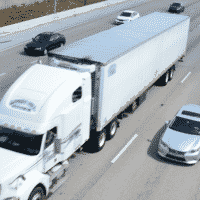
    Earlier this week, a tractor-trailer overturned a stopped traffic on I-95. There are five types of big rig accidents that are common on Palm Beach County highways. Rollovers are just one.

    Five types of Palm Beach County Trucking Accidents:

    1. Rollover accidents
    2. Head-on accidents
    3. Jackknife accidents
    4. Underride accidents
    5. Override accidents

    [divider type=”1″]

    [/divider]

    1. Rollover accidents – Most people are familiar with rollover crashes. Truck rollovers generally occur because of high speeds, shifting cargo, driver inexperience, improper maintenance or dangerous road conditions.
    2. Head-on accidents – A head-on truck crash occurs when one vehicle leaves its lane and crashes into on-coming traffic.
    3. Jackknife accidents – Jackknife truck wrecks occur when a truck driver suddenly brakes and the cab of the truck moves back to a position parallel with the trailer. When this happens, the driver will not be able to control his vehicle. Jackknife accidents often result in a rollovers.
    4. Underride accidents – In underrride accidents a smaller vehicle ends up crashed underneath the larger truck. This type of crash can occur when a driver is following a truck and the truck abruptly stops. If the driver cannot brake in time, his vehicle can get caught under the body of a tractor trailer. As the smaller car crashes into the semi-truck, anything coming into contact with the truck sustains serious damage – especially the occupants of the car. These types of accidents have a high fatality rate.
    5. Override accidents – Override accidents are similar to underride accidents, but the truck runs over the smaller vehicle. These deadly accidents often occur when a truck driver fails to check his blind spots for smaller vehicles. Because the bottom of a truck tends to hit a passenger car at eye level, victims who survive these types of accidents often sustain serious head injuries.

    Eighteen-wheelers are far larger than the standard passenger vehicle. When a truck and car collide in a West Palm Beach trucking accident, it is the occupants of the passenger vehicle that are most likely to sustain serious injuries.

    Unfortunately, even with the truck driver is at fault, the trucking companies will do their best to avoid paying damages. If you have been injured in a Palm Beach County large truck accident and want to ensure that you are treated fairly, you need an experienced Florida personal injury attorney on your side.

    Craig Goldenfarb, an accident attorney in West Palm Beach, fights for the rights of Florida injury victims. To discuss your claim with an accident attorney in West Palm Beach, contact the Law Offices of Craig Goldenfarb.