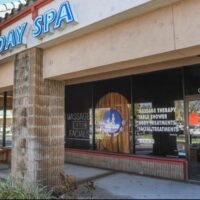
Earlier this month, Jupiter’s Orchids of Asia Day Spa was raided by authorities and its owner arrested on multiple counts of prostitution and human trafficking. Sadly, this situation is not uncommon. Estimates rank Florida third in the country for suspected human trafficking and criminal sex trade cases. Palm Beach is the third largest county for these cases.
In the Orchids of Asia Day Spa case, Martin County Sheriff William Snyder said many of victims immigrated from China in the hopes of taking a legitimate job in a spa. Unfortunately, once they arrived, they were forced to perform sex acts for clients. Many had their passports seized by their supervisors. They were confined to the store, sleeping and eating there when not with clients.
The criminal court system can be challenging for victims of sex trafficking, forcing them to face the accused and relive the trauma they experienced. Once the criminal aspects of the case are settled, victims may not want to pursue a civil case because they don’t want to go to court and repeat such a traumatic experience.
However, trafficking victims are frequently found in “high risk” businesses, such as day spas, seedy motels, etc. Often these businesses carry liability insurance, and the business owners were negligent. Many were even aware of the crimes taking place in their businesses and did nothing. As attorneys, we’re able to sue the defendant’s insurance company for compensation to help the trafficking victims move on with their lives.
In most cases, we do this without ever going to court, so the trafficking victim doesn’t have to deal with another difficult day in a courtroom. About 99 percent of the time, we recover compensation for the victim in the pre-trial stage.
Although securing compensation can’t erase the pain and trauma they suffered, it can ensure they have access to counseling and other mental health services to help them recover and restart their lives.
If you or someone you know was a victim of the Orchids of Asia Day Spa human trafficking and sex trade case, please consider contacting our office immediately to find out if we can represent you in a claim against the business owners. You have have the right to pursue a financial recovery for your suffering and abuse. Call us confidentially at 561-444-4440.
Abbie Rosemeyer, a Jupiter resident, died Monday, January 21st at 8:30pm in a car crash east of Belle Glade. According to Florida Highway Patrol, Rosemeyer was traveling west on State Road 80 west of Twenty Mile Bend, when an eastbound semi tractor-trailer attempted a left turn onto an access road roughly 4 miles west of Country Road 880. The 2015 Ford Fusion that Rosemeyers was driving at the time, collided with the truck which was driven by 57-year old Miami resident Jose A. Alonso. By the time the rescuers arrived, Rosemeyer had already passed away.
Rosemeyer was a distinguished community volunteer and her legacy will leave a lasting impression in Palm Beach County and the Treasure Coast. She was a board member for the nonprofit Families First of Palm Beach County and the director of business development at SandyPines Residential Treatment Center in Tequesta, which serves children and adolescents.
Even though no criminal charges have been filed, the Florida Highway Patrol is still investigating who is at fault for the incident. If Mr. Alonso is found to be responsible, the family of Abbie Rosemeyer will likely have grounds for moving forward with a civil Wrongful Death case. It is perfectly within the rights of the family to speak with an attorney to determine to investigate all possible claims of negligence, and to protect them from the insurance companies that may try to obstruct them from compensation they may be entitled to.
The Law Offices of Craig Goldenfarb, P.A. is dedicated to protecting the rights of individuals and families that have suffered injuries due to the negligence of other. Our attorneys have more than 170 years of combined experience investigating and representing those who have suffered tragic loss or severe injuries.
If you know a surviving family member of a person who was killed in an auto crash, please encourage them to give our firm a call immediately. The consultation is completely free, and there is no out-of-pock cost to the family to hire us.
Note: The purpose of this news blog, is to write about cases relevant to our industry and raise awareness about injury cases where victims of similar incidents can see what their rights are. This article is created using publicly available information and is a secondary source. If you find any information here to be inaccurate, please notify us and we will make the appropriate adjustments.
A 72-year-old man died after a collision he had with a car while driving a golf cart in Palm Beach Gardens. John McCasey, a Jupiter resident, was thrown from the golf cart as he drove into the crosswalk at Donald Ross Road and Pasteur Boulevard after being hit by a 2017 Honda CRV. According to the Palm Beach County Sheriff’s Office (PBSO), the accident occurred at 12:30pm on December 29th 2018 where the significant injuries McCasey sustained required he be taken to St. Mary’s Medical Center. He died at 2:30pm later that day as a result.
The driver of the CRV, Stephen Potts, 64 of The Villages was not injured during the collision and it does not appear that he will face any criminal charges in connection to the crash according police records. It may be the case that Potts was at fault and if confirmed as such, the family of the now deceased John McCasey will possibly have a valid case against Stephen Potts for the Wrongful Death. The family is entitled to hire an attorney to pursue all valid negligent claims and to protect their interests from the relevant insurance companies involved.
The Law Offices of Craig Goldenfarb, P.A. is dedicated to protecting the rights of individuals and families that have suffered injuries due to the negligence of other. Our attorneys have more than 170 years of combined experience investigating and representing those who have suffered tragic loss or severe injuries.
If you know a surviving family member of a person who was killed in an auto crash, please encourage them to give our firm a call immediately. The consultation is completely free, and there is no out-of-pock cost to the family to hire us.
Note: The purpose of this news blog, is to write about cases relevant to our industry and raise awareness about injury cases where victims of similar incidents can see what their rights are. This article is created using publicly available information and is a secondary source. If you find any information here to be inaccurate, please notify us and we will make the appropriate adjustments.
An elderly driver named Irma Fensterman died on Sunday, January 6th from injuries she sustained in a car accident she was involved in only 10 days earlier. The 88-year-old was driving her 2018 Honda Accord at 9am December 27th going north on Bryan Blvd toward Linton Blvd. Authorities from the Palm Beach County Sheriff’s Office (PBSO) claim that as she was driving across the intersection, another driver identified as Nicole Perez collided with the driver’s side door, in a 2016 Nissan Rogue, as she was heading east on Linton.
According to the report, both drivers claimed that they had a green light and though both were wearing their safety belts, Fensterman was immediately taken to Delray Medical Center where she died the following Sunday. Perez managed to walk away with minor injuries, but her father, when addressing the incident stated that ‘she may never be the same”, in reference to the distressing nature of the circumstance.
Though PBSO records indicate that they will not be pursuing criminal charges in this case, if Perez is found to be at fault, the family of the deceased may have a legitimate legal case for a Wrongful Death. The Fensterman family has the right to hire an attorney to help protect their family from the insurance companies that are looking into the incident. Additionally, any valid claims for negligence that might arise from such a tragedy are in the rights of the family to pursue.
At the Law Offices of Craig Goldenfarb, our attorneys have more than 150 years’ of combined experience in investigating serious vehicle accidents and protecting the rights of families who have suffered a traumatic loss.
If you know a surviving family member of a person who was killed in an auto crash, please encourage them to give our firm a call immediately. The consultation is completely free, and there is no out-of-pock cost to the family to hire us. Call 561-697-4440.
In the wake of former actor and comedian, Bill Cosby, being sentenced 3 to 10 years in a state prison for drugging and sexually assaulting Andrea Constand, there are still many unanswered questions for dozens of other victims.
Personal Injury Trial Attorney Spencer T. Kuvin, Esq. of the Law Offices of Craig Goldenfarb, P.A. in West Palm Beach, Florida, represents Chloe Goins, a former model who is also pursuing Cosby in civil courts for an assault that took place at the Playboy Mansion in Los Angeles some years back.
Commenting on the current sentencing with CBS12 News, Mr. Kuvin stated, “In the grand scheme of things, we would’ve loved for him to be put behind bars for 10 years.” He went on to elaborate on how our firm can now move forward with Ms. Goins’ civil case, now that the criminal sentencing has concluded.
“I certainly think that the sentence today has a significant effect on ultimately our civil case going forward,” Mr. Kuvin said.
Chloe Goins says that she met Cosby at the Playboy Mansion almost a decade ago, just before Cosby laced her drink with some unknown drug and sexually molested her. Mr. Kuvin says that Ms. Goins was looking forward to Cosby’s sentencing, and was obviously pleased that justice was served. It was at the Judge’s discretion whether to sentence Cosby to mere house arrest or prision time, and he chose prison.
“Now I believe we would be able to go to a jury out in California and say to them this is a convicted sexual predator. That, I think, significantly helps our case,” Mr. Kuvin says.
Cosby, who was convicted at trial in April of aggravated indecent assault, will be classified as a “sexually violent predator,” which requires a lifetime registration and mandatory counseling. Goins is one of at least 44 other women who claim Cosby assaulted them.
Mr. Kuvin hopes the Goins case against Cosby will go to trial sometime next year, however even if it takes longer or if Cosby were to pass away in custody, she could still potentially collect money from the Cosby estate.
Victim of Sexual Assault from a Celebrity or High-Profile Figure?
Sexual Assault is a very serious crime. If you’ve been a victim of unwanted sexual assault or battery from a powerful, famous, or otherwise high-profile individual, don’t be afraid – you deserve to be heard, and you deserve the support of an experienced legal team. It is not your fault. Our attorneys can help.
We offer a 100% free, 100% confidential case consultation with Mr. Kuvin. You may be entitled to compensation for your emotional suffering and other injuries.
Our lawyers will visit you anywhere in the U.S., discretely and quickly. For a faster response, fill out the simple form below with basic details. Your privacy is our primary concern. Therefore, you do not need to include details such as who the perpetrator is. You may keep your anonymity by using “Jane” or “John Doe” as a name. The most important things we need are a detailed description of what happened, and your phone number.
Introduction to this Developing Area of Civil Litigation
In 1990, the American Heart Association challenged the medical device industry to develop a state of the art AED capable of being used by virtually anyone. The industry responded in a timely manner, leading to significant advances in AED technology in the last three decades. Manufacturers such as Cardiac Science, Medtronic, Zoll, Hewlett-Packard, and many others have produced lightweight, affordable AEDs for use in a variety of public and private settings.
In an article dated August 5, 1996, the Wall Street Journal stated: “Now, a new wave of small, portable defibrillators is being developed…Manufacturers even envision a day when the devices, technically known as automatic external defibrillators…will be as common as fire extinguishers.” Since this article was published more than twenty years ago, AEDs have become more and more common in gyms, sports facilities, restaurants, airports, and a vast number of other public venues.
It appears that the Wall Street Journal’s prediction was right. With the increasing popularity of these devices, the standard of care has developed to the point that both common law and statutory regulation are beginning to require that AEDs are present in a variety of public places across the United States.
The Medical Problem: Sudden Cardiac Arrest
According to the Sudden Cardiac Arrest Association, sudden cardiac arrest is the leading cause of death in the United States, killing over 320,000 Americans each year.[ii] Sudden cardiac arrest kills more people than breast cancer, lung cancer, and HIV/AIDS combined. Use of an AED device is appropriate when sudden cardiac arrest occurs, which is an electrical malfunction of the heart that triggers a fatally abnormal heart rhythm or a complete stoppage of electrical activity.
A study conducted in 2010 estimated that only 8% of those who suffer an out-of-hospital sudden cardiac arrest will survive the event. However, medical studies indicate that a large percentage of these individuals could be saved by the timely application of an AED to restart the heart. Although there are several different causes and types of electric failure, timely defibrillation will result in saving the victim’s life in a variety of situations.
The Cost of AEDs has Significantly Decreased and AEDs are Easy to Use
Once costing more than $3,000, AEDs now cost as little as a third or less, due to competition in the marketplace and emerging technologies. Because of simple human body diagrams (which are located on the pads to be placed on the body) and the use of voice prompts with the current AED models, these devices are so easy to use that recent medical studies show that children as young as sixth graders can use them. Current AED models even administer the “shock” without human intervention or having to push a button when a shock is indicated. Consequently, user error is extremely unlikely.
The Federal Government and All 50 States Have Enacted Laws Relating to AEDs and AED Usage
AEDs are required in airports
Under federal laws, federal buildings and all large commercial airplanes must have AEDs. All airports under FAA jurisdiction must also have AEDs. In fact, one of the first studies of public defibrillation’s effectiveness was conducted in Chicago’s O’Hare Airport. First published in 2002, this study supported the effectiveness of AED use in saving lives.
The Cardiac Arrest Survival Act, passed in 2000, established some of the first national standards for Good Samaritan Protection, which protects lay users of AEDs from civil liability. As of 2001, all fifty states had enacted state statutes or adopted regulations in this area of law. Every state has its own Good Samaritan Act and its own body of appellate law regarding duty, breach, and causation. In fact, in 41 of 50 states, (more than 80% of state jurisdictions), untrained lay rescuers are protected from civil action in the majority of circumstances.
Laws typically focus on where AEDs are required, guidelines for their maintenance and use, and protection for lay users and business owners. Under state laws, AEDs are often required in businesses, including common carriers, innkeepers (hotels), commercial businesses, and doctors’ offices. Even where they are not required, forensic experts may testify that the common law has developed so that a business should have had an AED despite the lack of a law requiring that business to do so.
Recent Trends in Legislative Activity in the 50 States
In 2015-2016, state legislators across the United States increased their focus on the requirement of having AEDs at primary and secondary school athletic activities, including games off school property. Louisiana, Massachusetts, Maine, Rhode Island, and Washington, DC enacted such laws during this time period.
What are the Common Fact Patterns, and is the Public Aware of this Area of Litigation?
There are several common fact patterns in these types of cases. However, in this author’s experience, three scenarios are the most common:
The first scenario is where no AED was present at the premises. The plaintiff may allege that there should have been an AED present under a common law duty. However, absent a statutory requirement, the case where there is no AED present is a very difficult case, as juries do not want to penalize businesses for not having a device if it was not required by law.
The second scenario is where an AED was present at the premises but the employees/staff did not know where it was or were improperly trained in its use. These cases are often successful, because a life saving device was purchased, was available, and was simply not used or not used correctly.
The third common scenario is where an AED malfunctioned, the battery was dead, or some other failure to maintain the device occurred. In these situations, the family of the deceased might become aware of potential liability because the failure is evident at the scene.
In general, the public does not usually think “lawsuit” when a loved one dies of sudden cardiac arrest. However, the question of “did they have an AED?” is now becoming more common when a person dies in a public place. In addition, public information campaigns by AED manufacturers, lawyers, and organizations such as the American Heart Association have increased the public’s awareness of the need for AEDs in public places.
The Elements of Civil Litigation: Duty, Breach, Causation, and Damages
Duty and Breach: Even absent a requirement under statute or ordinance, experts in the standard of care will often testify that an AED should have been present at certain public places, thus allowing the plaintiff’s attorney to defeat summary judgment or a motion to dismiss on the issue of duty. The battle usually involves the duty established by the Restatement of Torts, Section 324, which addresses the applicable duty in emergency situations.
Causation: Does the Medical Research Support Causation and Prevent-ability of Death? Whether timely use of an AED would have saved the victim is typically the area of greatest debate in litigation. Studies by the American Heart Association have long supported the premise that for every minute of delay in getting a person with a “shockable rhythm” adequate defibrillation, their chance of survival decreases by 7-10%. Thus, after about five minutes, the person’s chance of survival becomes less than 50%. According to the Florida Department of Health, the average EMS response time is nearly eleven minutes.
However, after ten minutes have elapsed from the moment of the sudden cardiac arrest, the patient has a less than afive percent chance of survival. Thus, survivability and prevent-ability of death is usually not difficult to prove through expert testimony from a qualified cardiologist. Cardiologists, electrophysiologists, and forensic pathologists can thus support, through medical evidence, an opinion that if an AED had been used on the right type of sudden cardiac arrest patient, then the patient could have been saved. For causation purposes, a timeline of events must be established.
In most cases, local EMS arrives at the scene within about ten minutes and administers their own defibrillator, which analyzes the victim’s heart rhythm. The EMS report will contain an EKG reading, which the plaintiff’s expert can then use to see if the particular heart rhythm was one that an AED could have successfully shocked back to normalcy. This EMS report can also establish the exact delay caused by the premises’ failure to have an AED or the failure to use the AED that was on the premises.
Once the precise time of the person’s cardiac arrest is established through witness testimony, the plaintiff can then establish how quickly the person could have been saved if an AED would have been immediately available. In addition, in most cases the dying person is taken to the hospital where another EKG is performed. These EKG strips can also identify the specific type of electrical disturbance, further assisting the expert(s) in their evaluation.
Damages: Most cases involving cardiac arrest involve either death or some sort of neurological injury caused by lack of blood flow to the brain. Thus, the damages in these cases are always significant. The author of this article has handled cases of victims ranging from ages 11 to those in their 90s.
Emerging Trends in AED legislation and civil litigation
In 1997, Lufthansa paid the first judgment in this area of law, after a federal judge awarded $2.4 million dollars to the plaintiff, who successfully argued, among other theories of liability, the failure of the defendant to have an AED on one of its airplanes.
After the Lufthansa case, litigation in this area of law has now become common, either for the failure of a premises owner to have an AED when required (under common law, state statute, or municipal/county ordinance), the negligent failure to properly find or use an AED when it is already present on the premises, or for a defect or malfunction in the device itself. Recent cases involving the deaths of individuals on airplanes, the deaths of Tim Russert, Michael Jackson, Carrie Fisher, and the deaths of professional athletes, have brought this area of law to the forefront in the last decade.
For a comparison of each state’s law, go to the National Conference of State Legislature’s website, which has a page where you can see each state’s Good Samaritan Act and its subsection regarding AEDs.
What is the future in this area of law?
The author of this article publicizes this area of law in publications, lectures, and through public information campaigns in the form of lectures to condominiums, gyms, and various other organizations to promote the purchase of these life-saving devices. By encouraging the widespread use of AEDs to save lives, we can all help establish a standard of care that encourages AED use in a variety of settings, while maintaining common sense liability protection for lay users.
Hopefully, in time the Wall Street Journal article from 1996 will ring true and AEDs will become as common as fire extinguishers.
[vc_row][vc_column][vc_column_text]A West Virginia family is grieving the loss of their previous 8 year-old boy, Caleb Ray, after he suddenly collapsed on a soccer field in Lincoln County. The father was there by his side within seconds, and CPR was administered while the ambulance rushed to the scene. Unfortunately, Caleb could not be saved. The family has been quoted as believing that the cause of death was Sudden Cardiac Arrest (SCA).
The boy’s surviving parents describe the scene of the incident as being on a soccer field. Young Caleb was just starting the first practice session of his soccer season. Though the details have not been released, it appears that he had joined a little league team, and may have been on the premises owned either by the city, or a youth athletic organization.
It also appears there was no Automated External Defibrillator (or “AED”) present. These life-saving devices counter-act sudden cardiac arrest by delivering a shock to the heart that normalizes heart rhythms.
Why there may be a potential liability case
There maybe a potential liability case against the owner(s) of the field that the incident occurred on for not having an AED present. West Virginia state laws dictate how and when AEDs should be present and used. A theory of liability may lie in the statute.
West Virgina does have a Good Samaritan law, but that may only apply in situations in which an AED is used. Further, it is unclear on first reading of WV laws what facilities or organizations may by required to have an AED on site. If an AED was required, and one was not present when Caleb experienced SCA, the owners and/or managers of the property on which the incident occurred may be held liability.
The family is doing the right thing
The surviving parents are doing the right thing by advocating for the widespread adoption of AEDs. With an AED present, the chances for survival for a victim of SCA tops 90% when used within three minutes of the onset of the sudden attack.
The family has received donations to help buy AEDs to be present at youth sports games.
It is imperative that the family seek legal advice from an experienced law firm in this area of law. These consultations are completely confidential and free.
As the founder of the Law Offices of Craig Goldenfarb, P.A., Mr. Goldenfarb manages the daily operations of all of the many departments of the law firm.
Craig M. Goldenfarb, Esq. has been practicing personal injury law, and specifically, AED litigation, for almost 20 years.
Mr. Goldenfarb is the former Chairperson of the AED Litigation Committee of the American Association of Justice (AAJ), a nationally recognized civil trial lawyers group.
Mr. Goldenfarb has represented dozens of families of victims of Sudden Cardiac Arrest in wrongful death litigation for incidents in which fatal SCA occurs and there is no AED available, or the AED malfunctions.
He is also the founder of Heart of the Game, a national 501(c)(3) non-profit dedicated to providing free AEDs and emergency medical training to recreational youth sports programs.[/vc_column_text][/vc_column][/vc_row]
The Sun-Sentinel reported this morning on that the death toll on railroad tracks in South Florida has nearly doubled in 2017 from 2016.
The report cited data that showed through September of 2017, twenty-three people lost their lives due to suicide or accidental death in collisions with trains operated by Tri-Rail, CSX (shipping), and Florida East Coast Railway, on which Amtrak passenger trains operate.
Compared to only 14 deaths in all of 2016, twenty-three in only nine months is a staggering increase.
Why is this important to our law firm? The reason is that some of these incidents may be legitimate personal injury death claims. The surviving family members could hold the owners and operators of these dangerous machinery accountable if there was negligence involved on the part of the owners.
Our law firm has handled several of these cases this year
Of the twenty-three death cases recorded in South Florida in 2017, our law firm has represented the families in several of those cases. Because of confidentiality for both the family and the defendants, we will not go into any specific details on any of those cases.
However, there is some information insight we can provide.
Firstly, the operators of the rail line are responsible for ensuring that the rail line is operated in a safe manner. That may mean that the trains and commuter lines be operated within established speed and guidelines. That also may mean keeping their premises blocked or cordoned off from pedestrian, vehicle, or bicyclist traffic at dangerous or populous intersections.
If any safety measures were breached during the operation of any rail line, whether it be logistical train lines operated by CSX, or commuter lines operated by Tri-Rail or Brightline, and the result is that someone was killed, that may be a personal injury case.
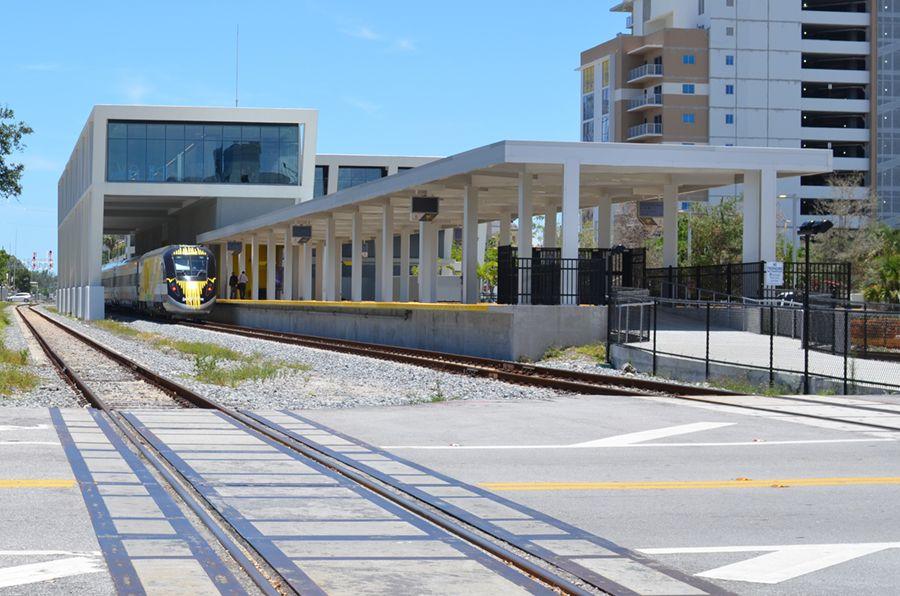
A Brightline train waits to board passengers. The problem with railroad deaths is only expected to rise as Brightline comes into full service from Miami to West Palm Beach.
Another interested point to note is that these rail cars, especially the newer, faster, and more technologically advances rail cars like Brightline, are deceivingly quiet. Though the report released today cites some portion of the deaths being linked to suicide, it’s entirely possible for someone to stumbled upon the rail line, and be killed un-expectantly.
These are extremely difficult cases to prosecute in civil court, which is what our law firm does on behalf of the families who lose loves ones due to accidental and fatal encounters with trains throughout South Florida.
But we do our very best to pursue justice on behalf of our clients. If we can prove negligence was a factor, we will relentlessly pursue these operators.
As with all potential personal injury matters, families of loves ones who have lost someone should call our law firm to find out if we can help. Consultations are completely free, and there is no cost or fees for our firm to begin working on the case. We are only paid if we secure a settlement or verdict on behalf of our client.
An 88-year old man, Yefim Bogomolsky, has died a week after suffering a terrible car crash at one of the busiest and most dangerous intersection in West Palm Beach, Okeechobee Blvd and Military Trail. We’ve represented many victims of car crashes that have occurred in the past at that intersection.
Mr. Bogomolsky reportedly passed away about a week after his vehicle was struck by another man who lost control, and ran into his vehicle. At the time of the crash, Mrs. Bogomolsky was in the vehicle with her husband; she reportedly survived the car crash.
In fatal car crashes such as this one, it’s the job of the personal injury lawyer to establish liability and damages against the other party’s auto insurance company.
Why the other driver may be held liable for Mr. Bogomolsky’s death
The driver of the vehicle that apparently caused the crash, a young woman in her twenties who lost control of her vehicle at the intersection of Okeechobee Road and Military Trail, should be sued for the death of Mr. Bogomolsky.
In a wrongful death lawsuit, it’s actually her insurance company that is sued for this needless death, not the driver personally. The auto insurance company is her representative in legal matters such as this – in fact, that’s part of the reason we all pay for auto insurance.
The damages are clear: a man lost his life, and a surviving spouse if left to live on without him. Those may be considered very substantial damages in the eyes of the law.
Liability is always less clear, but it may be established by a talented personal injury lawyer. The argument for liability in this case would be to establish that the young woman actually caused the crash that resulted in Mr. Bogomolsky’s death, by proving through experts, witness testimony, and evidence that she in fact lost control of her vehicle at that fateful intersection.
There are the two most important factors when determining the validity of a case such as this one. Of course, they are not the only factors. Available insurance coverage is extremely important, as well as identifying all applicable insurance coverage policies.
This is all within the scope of the valuable work that a personal injury law firm does. Not all personal injury law firms focus on catastrophic death cases such as this; our firm in West Palm Beach happens to be one of those firms.
If you know a surviving family member of a person who was killed in an auto crash, please encourage them to give our firm a call immediately. The consultation is completely free, and there is no out-of-pock cost to the family to hire us. Call 561-697-4440.
The family of a young man is seeking answers in the sudden death of their 14-year old boy, Kamarr Scott, while on school property.
News reports say that the young man was participating in P.E. class at Somerset Academy Village, a public charter school in Wilton Manors.
The young man had apparently been doing laps around the track field when he collapsed without warning. He was rushed off to the hospital, where he later died. The family says he has no history of poor health, and that Kamarr was a sweet, loving child.
The circumstances surrounding what happened to Kamarr seem to indicate that he died of Sudden Cardiac Arrest (SCA), a condition in which the heart suddenly stops functioning correctly. SCA can quickly lead to permanent brain damage, or worse, in a very short amount of time if not quickly reversed with an AED.
Could an AED have saved Kamarr’s life, and was an AED used by school staff?
Somerset Academy may have been required to keep an AED (automated external defibrillator) on school premises at all times. Further, the school may have been subject to laws which extend a “duty of care” to the teachers and staff.
That means that if an AED was not present on campus grounds, or if it was present but was not used on Kamar as we experienced SCA, the family may have a Wrongful Death claim against the school.
Often, AED’s are required to be present in places like public schools, including public charter schools, but aren’t always functional, or they aren’t always used. That may create liability on the part of the school and staff for the negligent death of a child due to SCA.
Whether or not a case exists in any particular situation is the responsibility of a personal injury law firm with experience in AED law and heart attacks in public places to figure out.
Consultations for matters similar to the unfortunate circumstances of young Kamarr are free and confidential for surviving family members of children who died due to SCA, or an AED not being used.
If you or someone you know has lost a child on school property due to SCA, please give our law firm a call as soon as possible to find out if we can help.

 In the wake of former actor and comedian, Bill Cosby, being sentenced 3 to 10 years in a state prison for drugging and sexually assaulting Andrea Constand, there are still many unanswered questions for dozens of other victims.